 Fungal Forest Care Day Brings Community Together to Grow a Healthier Forest
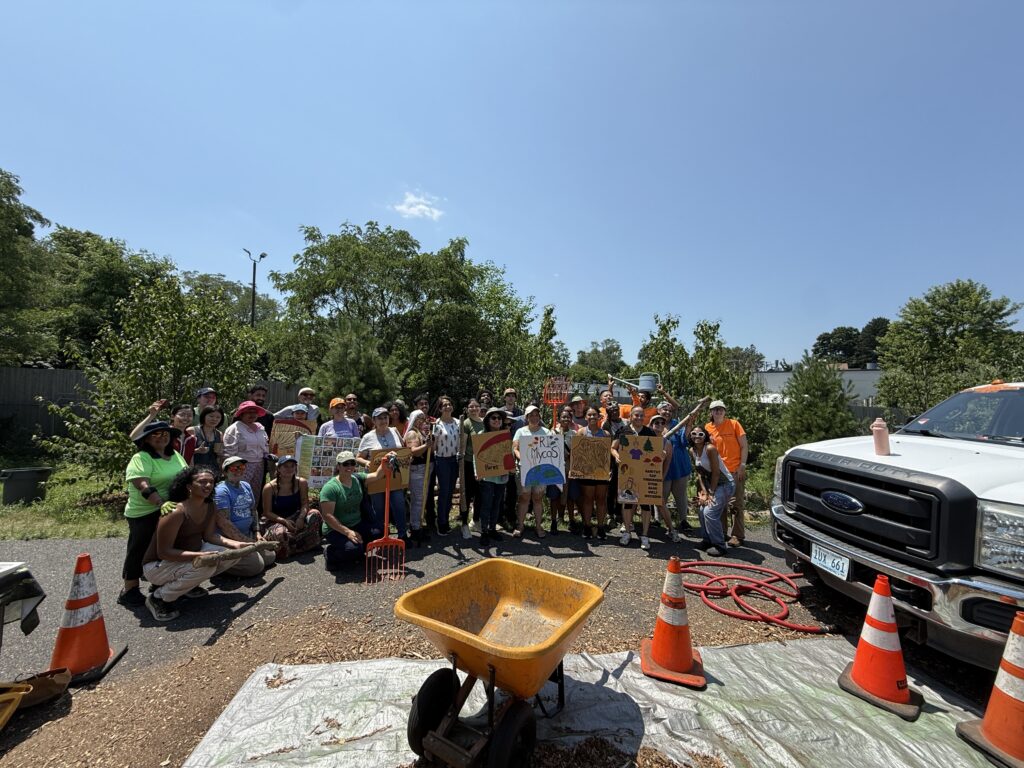
Beneath every healthy forest is a hidden network of life, and during our July Fungal Forest Care Day, 46 community members came together to learn about it firsthand while helping it grow.
Hosted by the Woonasquatucket River Watershed Council in partnership with the Northern Rhode Island Conservation District (NRICD), this Forest Care Day welcomed volunteers of all ages to our Fungal Forest along the Greenway for a morning of FUN-GI!
The day began with a guided walk to the Fungal Forest, where participants explored the important role fungi play in healthy ecosystems. Volunteers learned the difference between mushrooms and fungi, how underground fungal networks connect with tree roots through mycorrhizae, and how soil microorganisms can improve forest health and even help restore polluted environments.
A special thank you goes to Deana and Michael from the Rhode Island Mycological Society for sharing their expertise throughout the event, and to our partners with the 15 Minute Field Trips program for helping organize such a successful day.
One of the highlights was seeing Taliq, a recent graduate of our Arboleros program, return as a co-facilitator. Taliq helped guide volunteers through the day’s activities with enthusiasm and knowledge.
After the presentations, it was time to get to work.
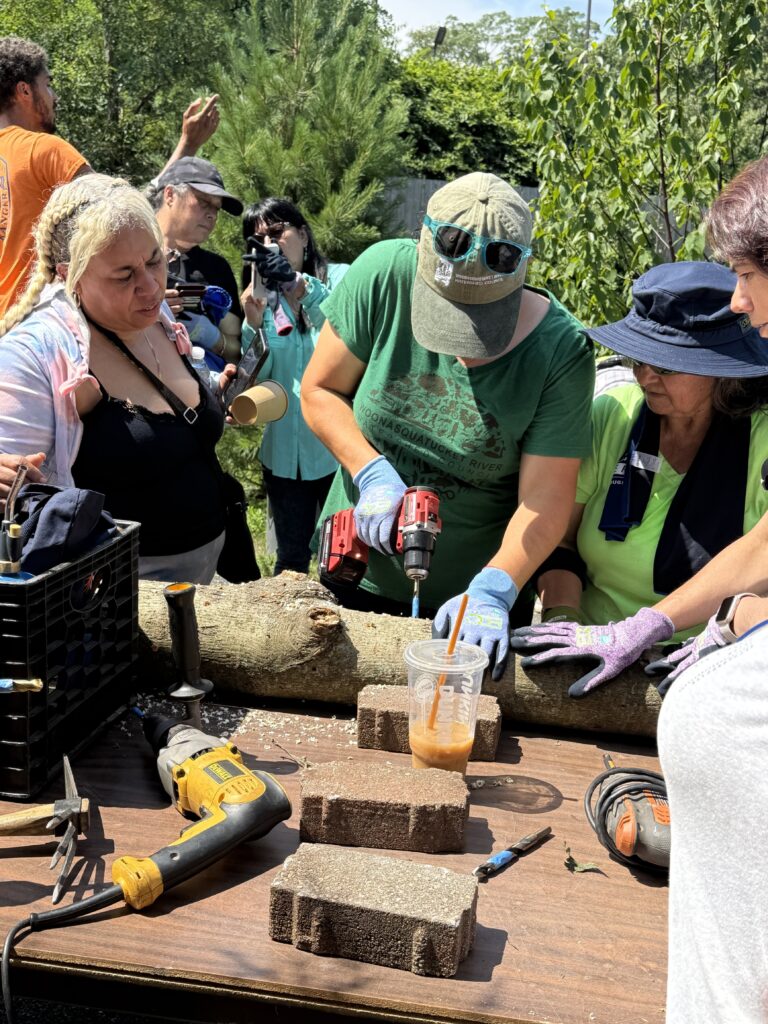
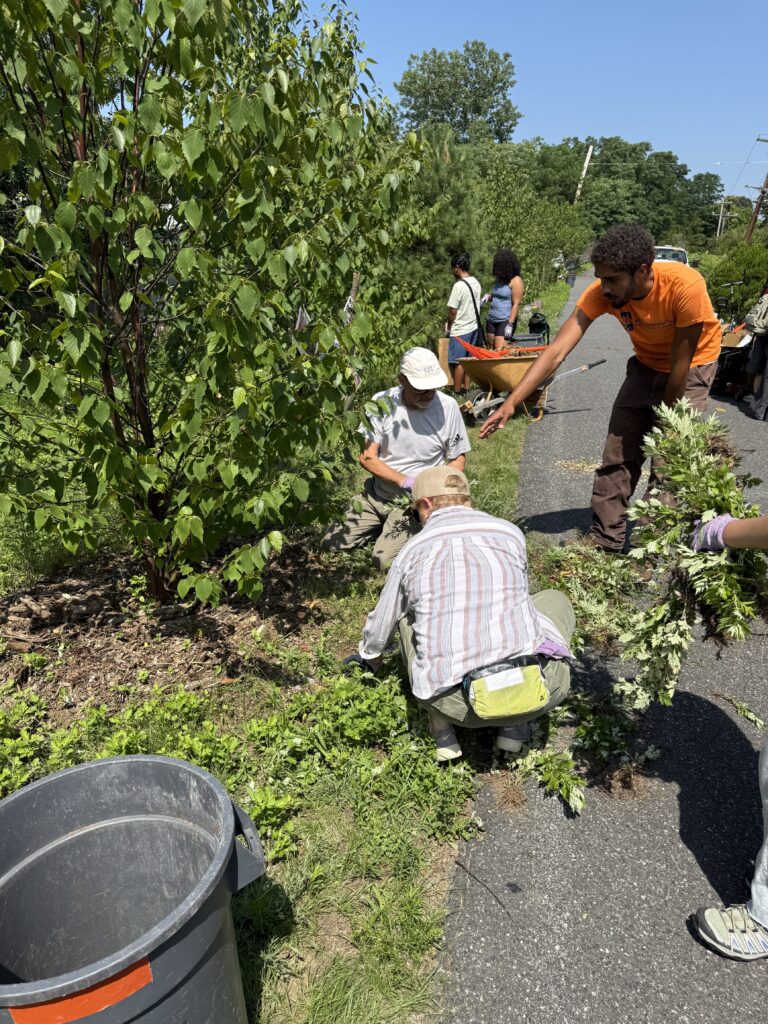
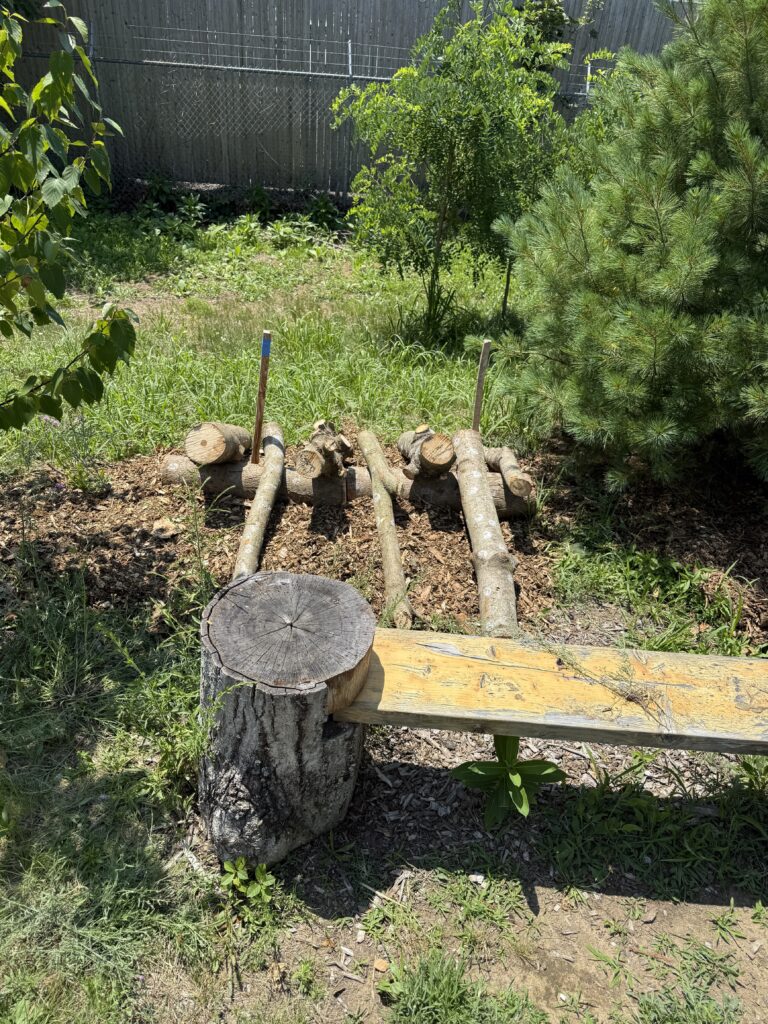
Volunteers weeded planting beds, spread fresh mulch, and created new mushroom habitat by inoculating freshly cut logs. Working through a series of stations, participants drilled carefully spaced holes into each log, inserted mushroom spawn plugs, and sealed them with wax to protect the developing fungi. Together, volunteers also established new wine cap mushroom beds by introducing mushroom spawn and beneficial soil microorganisms into mulched areas of the forest.
Now comes the exciting part. Over the next six months, these logs and mushroom beds will quietly develop underground before producing mushrooms that will continue building healthier soils and stronger ecosystems within the Fungal Forest.
Events like this demonstrate that caring for our urban forests goes far beyond planting trees. Healthy forests depend on healthy soil, and healthy soil depends on the incredible organisms working beneath our feet.
Thank you to everyone who joined us, especially our partners at the Northern Rhode Island Conservation District, the Rhode Island Mycological Society, the 15 Minute Field Trips program, and all of the volunteers who spent the morning learning, digging, drilling, mulching, and growing something meaningful together.