Community Open House Brings Residents Together to Discuss the Future of the Woonasquatucket River and Centredale Manor Cleanup
The Woonasquatucket River Watershed Council (WRWC) recently joined the U.S. Environmental Protection Agency (EPA), the Rhode Island Department of Environmental Management (RIDEM), and the Rhode Island Department of Health (RIDOH) for a community open house focused on the Centredale Manor Restoration Project Superfund Site and the future of the Woonasquatucket River corridor in Johnston and North Providence.
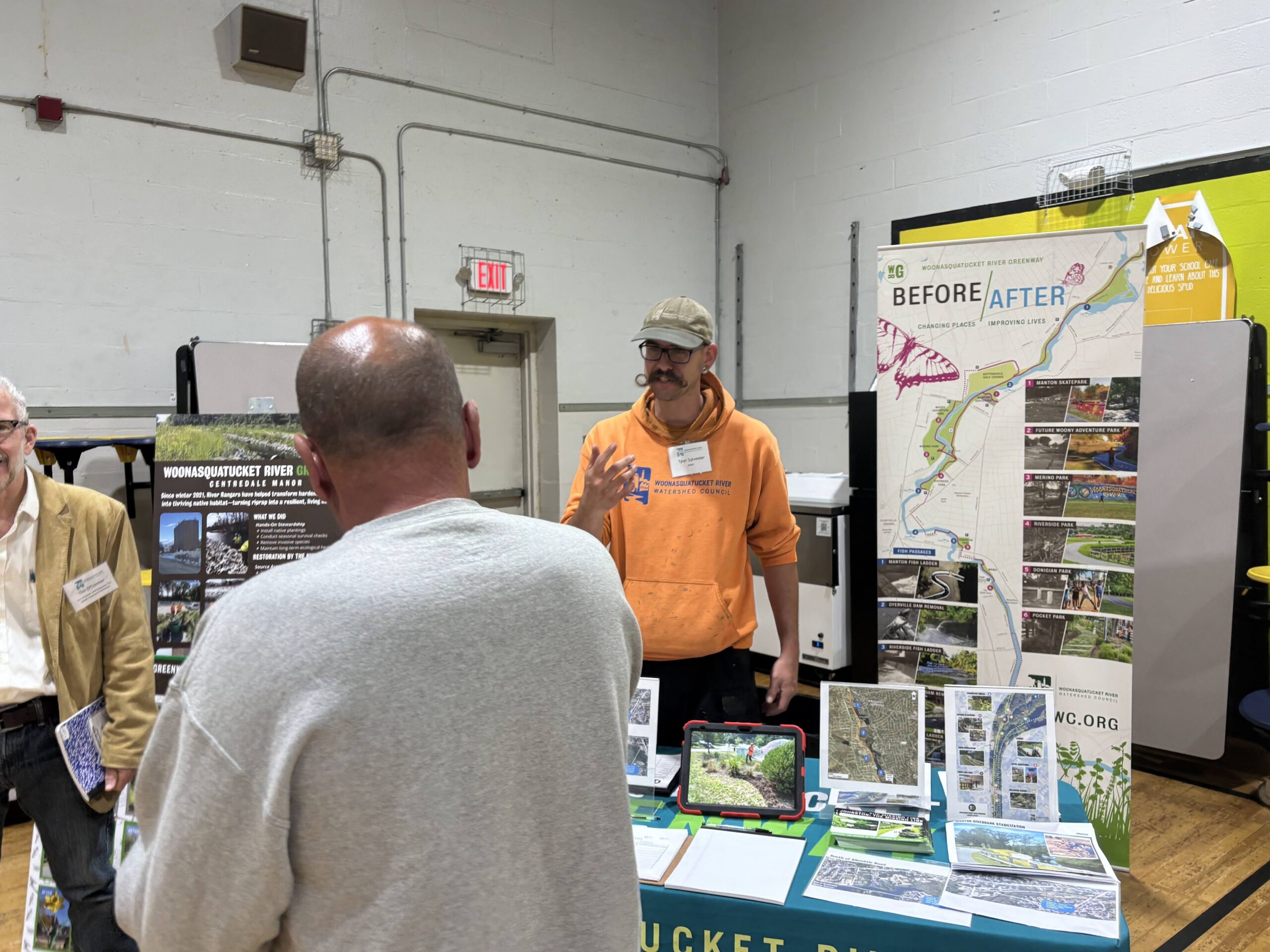
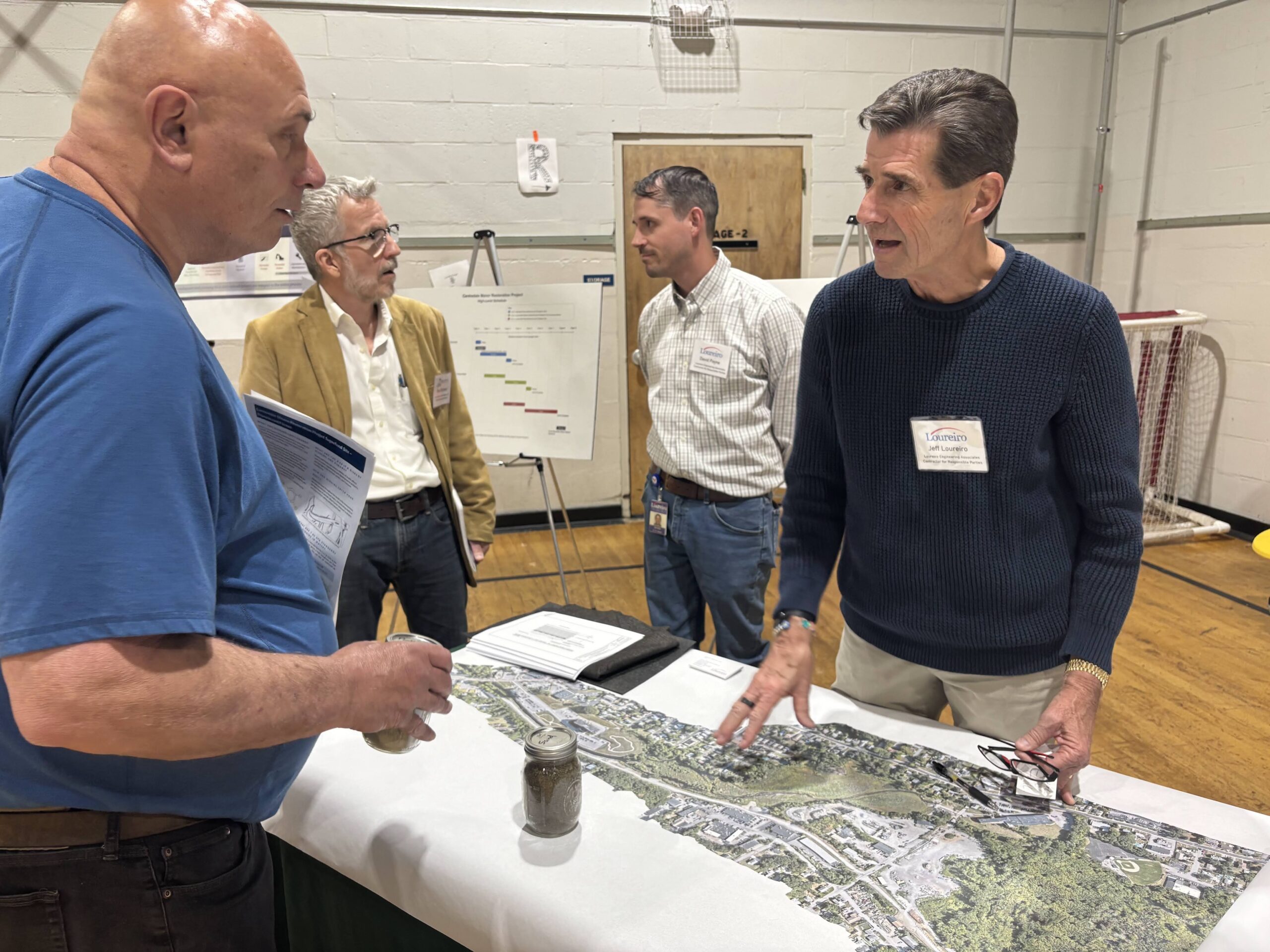
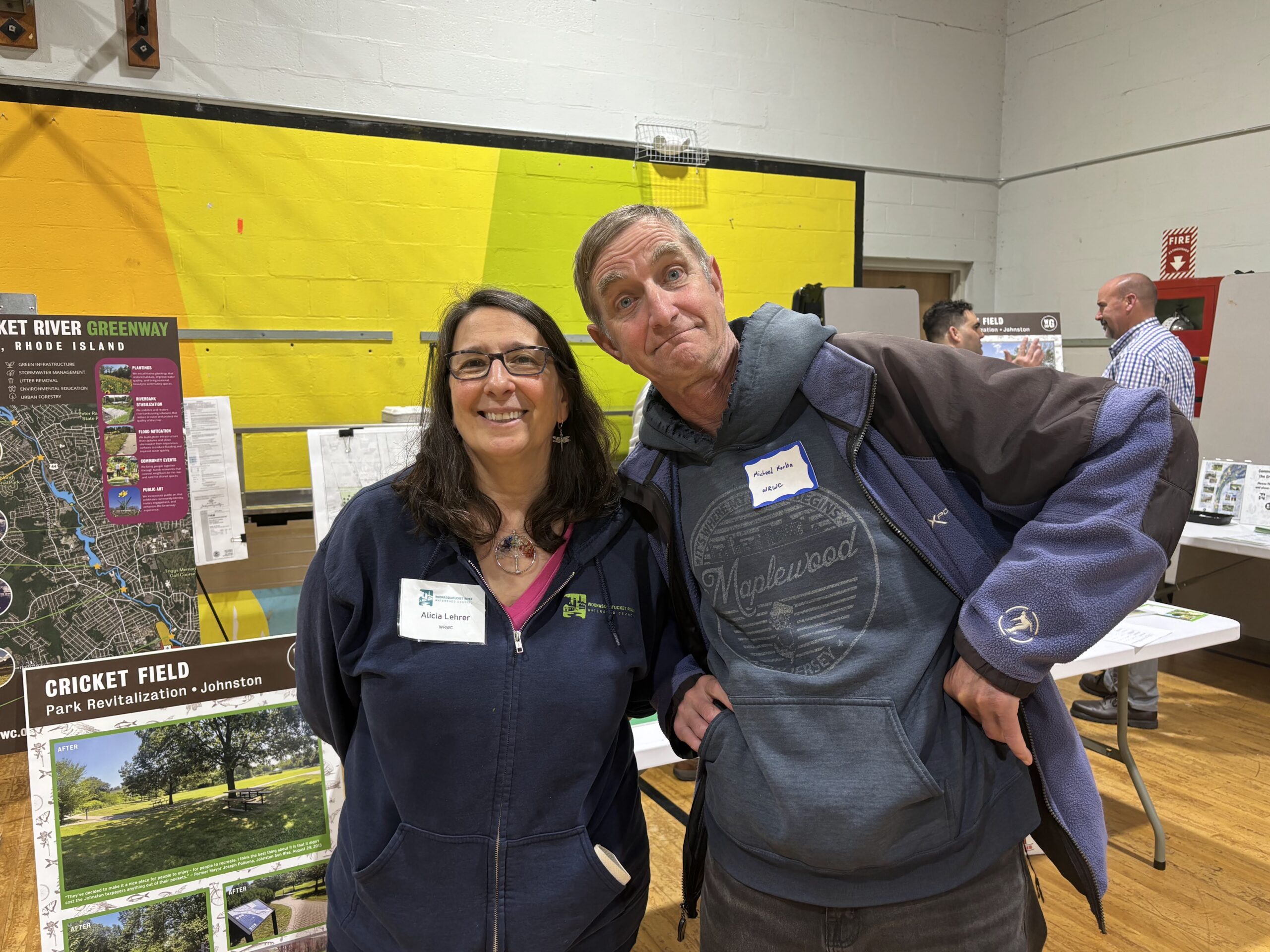
Held at Centredale Elementary School on May 7, the event welcomed around 40 residents and neighbors for thoughtful, informative, and at times challenging conversations about environmental cleanup, public health, habitat restoration, and the future of public access along the river. Community members reviewed and voted on two potential Woonasquatucket River Greenway design concepts near Sherman Field while also learning more about ongoing remediation efforts at the Superfund site.
The Centredale Manor Restoration Project Superfund Site includes a 9-acre former chemical manufacturing and drum reconditioning facility as well as approximately 1.5 miles of the Woonasquatucket River, nearby floodplains, wetlands, and pond systems in Johnston and North Providence. According to EPA, contamination at the site resulted from chemical production and drum reconditioning activities that took place between the 1940s and 1970s. Dioxins, furans, PCBs, metals, and other contaminants were released into the soil and river system during that period.
EPA representatives shared updates about the long-term cleanup process, which officially began in 2018 under EPA and RIDEM oversight. Cleanup work is being completed in phases across four separate operable units. Initial efforts included fencing the property, capping contaminated soils, and stabilizing areas to prevent the spread of pollutants. Current and future phases involve removing contaminated river sediments and soils, processing materials on site, and transporting contaminated waste to approved disposal facilities.
Residents also learned what they can expect to see during the next several years of remediation work. EPA explained that portions of Allendale Pond, the Oxbow Area, and Lyman Mill Pond will undergo active cleanup, requiring temporary lowering of water levels so construction equipment can access contaminated sediments and riverbanks. Some trees and vegetation will need to be removed during construction, followed by long-term habitat restoration and replanting with native species.
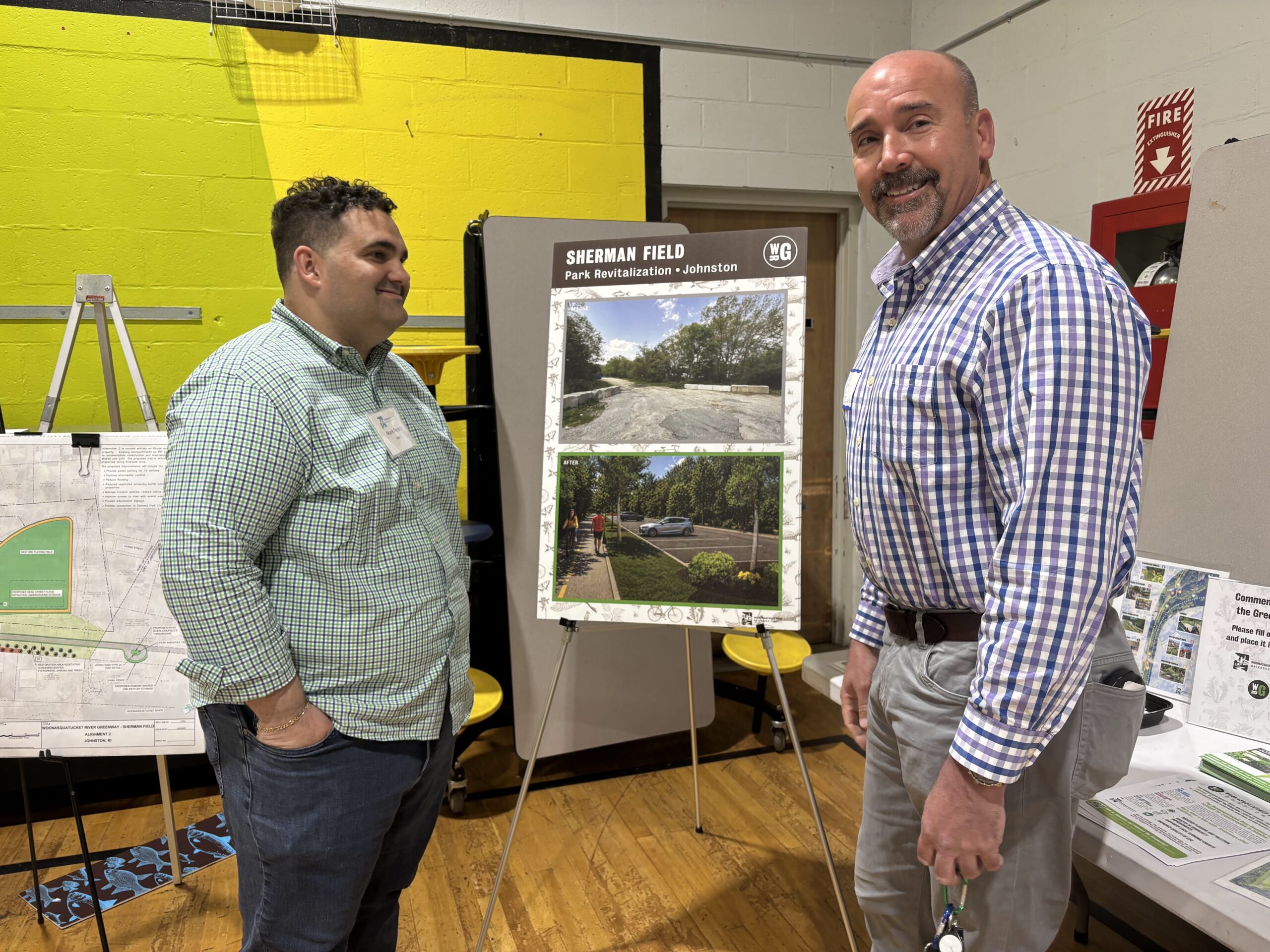
WRWC staff and partners emphasized that restoration planning is happening alongside remediation work. Future goals include restoring wetlands, improving fish passage opportunities, expanding native vegetation, and potentially extending the Woonasquatucket River Greenway using portions of the existing haul road once cleanup activities are complete. Discussions around the Oxbow Wetland included ideas for educational boardwalks, wildlife viewing opportunities, and expanded community access in collaboration with property owners and agencies.
Throughout the evening, community members raised questions about health risks and safe river use. RIDOH representatives explained that dioxins, furans, and PCBs can remain in the environment for long periods of time and accumulate in fish and wildlife. Current fish advisories remain in effect for portions of the river downstream of the Johnston/Smithfield border near Cricket Field. RIDOH continues to advise residents not to eat fish, turtles, eels, or plants collected from affected sections of the river and recommends avoiding swimming or wading in contaminated areas downstream of Cricket Field.
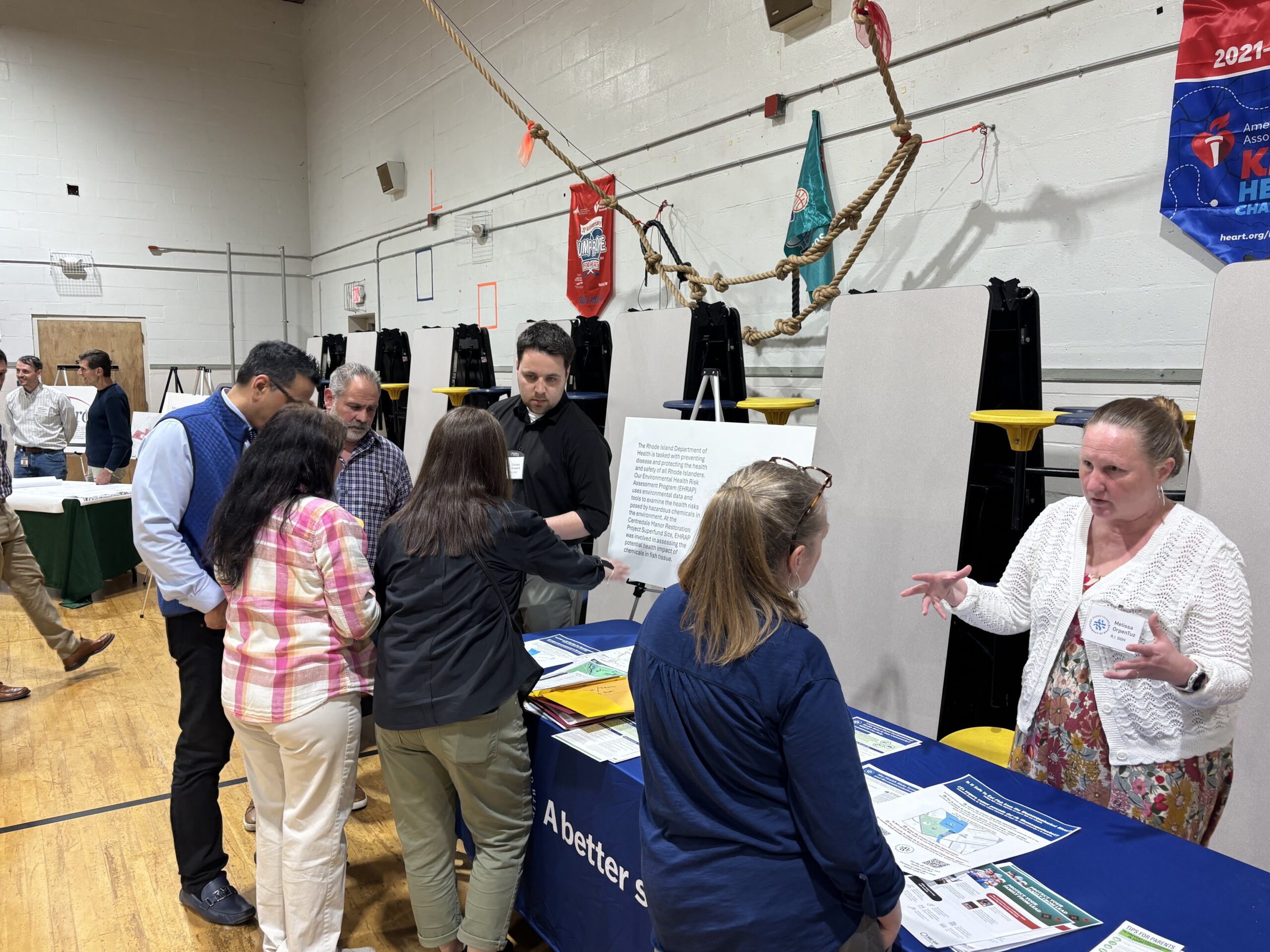
RIDOH also shared information about its Environmental Health Risk Assessment Program (EHRAP), which helps communities understand potential health risks associated with environmental contamination. The agency explained how it reviews environmental testing data, evaluates exposure risks, develops public health recommendations, and works directly with community organizations and residents to communicate findings in accessible ways.
RIDEM staff answered questions about stormwater pollution, wetlands, wastewater systems, and long-term environmental management efforts across the watershed. Information was also provided about volunteer water quality resources, cyanobacteria monitoring tools, and practical ways residents can reduce polluted stormwater runoff through everyday actions such as proper disposal of household chemicals, reducing fertilizer use, and protecting storm drains from debris and waste.
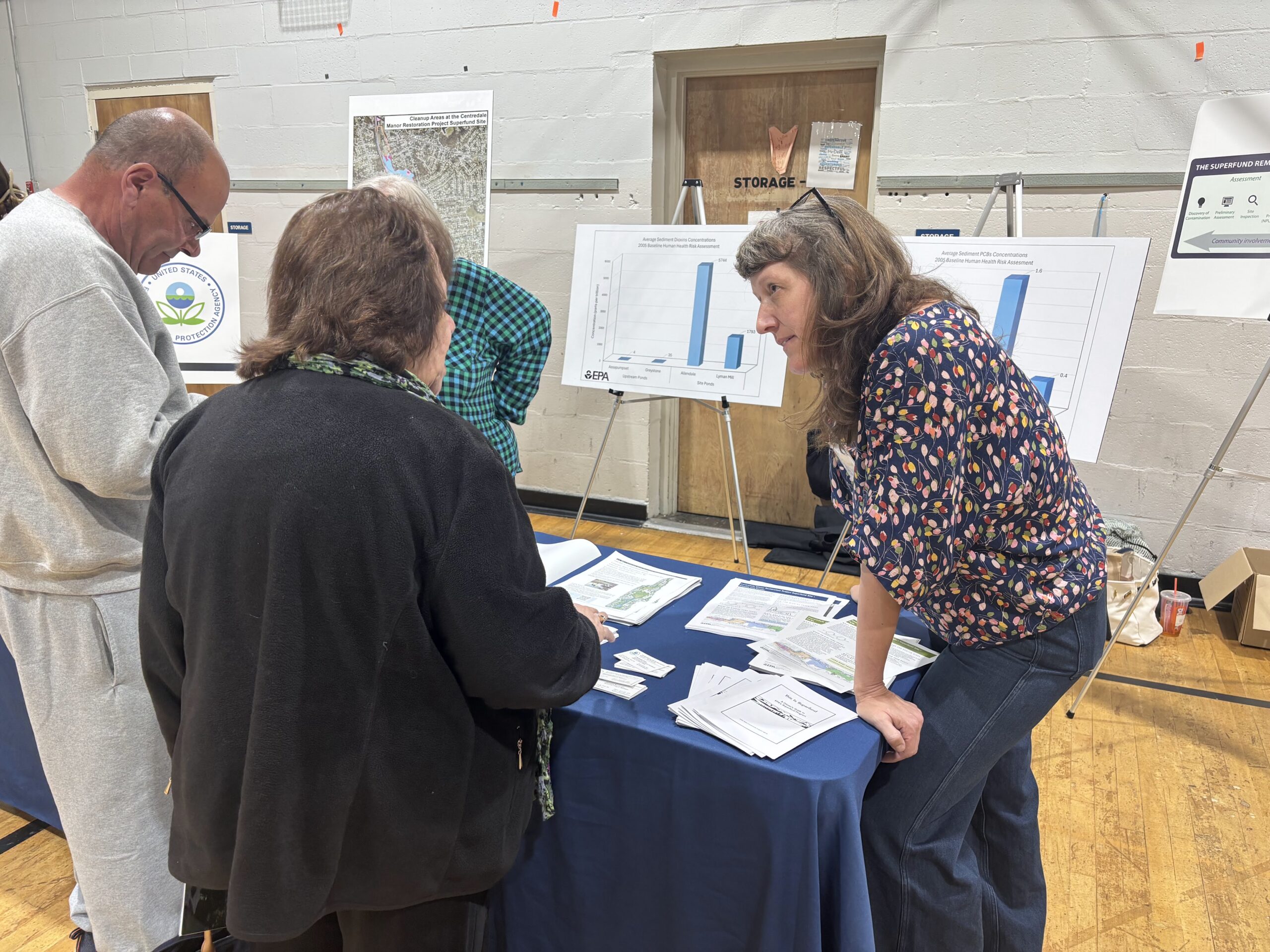
A major theme throughout the evening was the importance of continued collaboration between residents, agencies, and community organizations. WRWC continues to serve as the site’s Technical Advisory Group and has worked for decades to help residents better understand the cleanup process while advocating for a healthier, safer, and more accessible Woonasquatucket River. Through programs like River Rangers, environmental education initiatives, and Greenway planning efforts, WRWC remains committed to balancing ecological restoration, public health, recreation, and long-term community stewardship.
Community members looking for additional information can visit EPA’s Centredale Manor Restoration Project website at: EPA Centredale Manor Site Information
Residents with health-related questions about environmental exposure can contact RIDOH’s Environmental Health Risk Assessment Program at 401-222-7746 or by email at: RIDOH Environmental Health Risk Assessment Program
Information about stormwater protection, cyanobacteria monitoring, and water resources can be found through the Rhode Island Department of Environmental Management.