Camp Woonasquatucket’s Second Summer Was Bigger and Wilder Than Ever
Camp Woonasquatucket returned to the Leo Bouchard Conservation Center this summer for its second year, and 2026 brought an even bigger season of outdoor exploration, environmental science, creativity, and adventure.
Over four weeks of summer camp, we welcomed 45 young people ages 7–13 from Providence, Johnston, Smithfield, and communities across the Woonasquatucket River watershed. We also continued our partnership with Onward We Learn, welcoming high school students for an additional four-day program focused on environmental science and environmental justice.
For some campers, this summer was their first opportunity to interact with nature in such a hands-on way. Others arrived already familiar with the woods, ponds, and wildlife around them and left knowing much more about the ecosystems in their own backyards.
Either way, after five days of hiking, paddling, experimenting, investigating, creating, and getting their hands dirty, our campers left with a whole new appreciation for nature.
The Leo B Lab
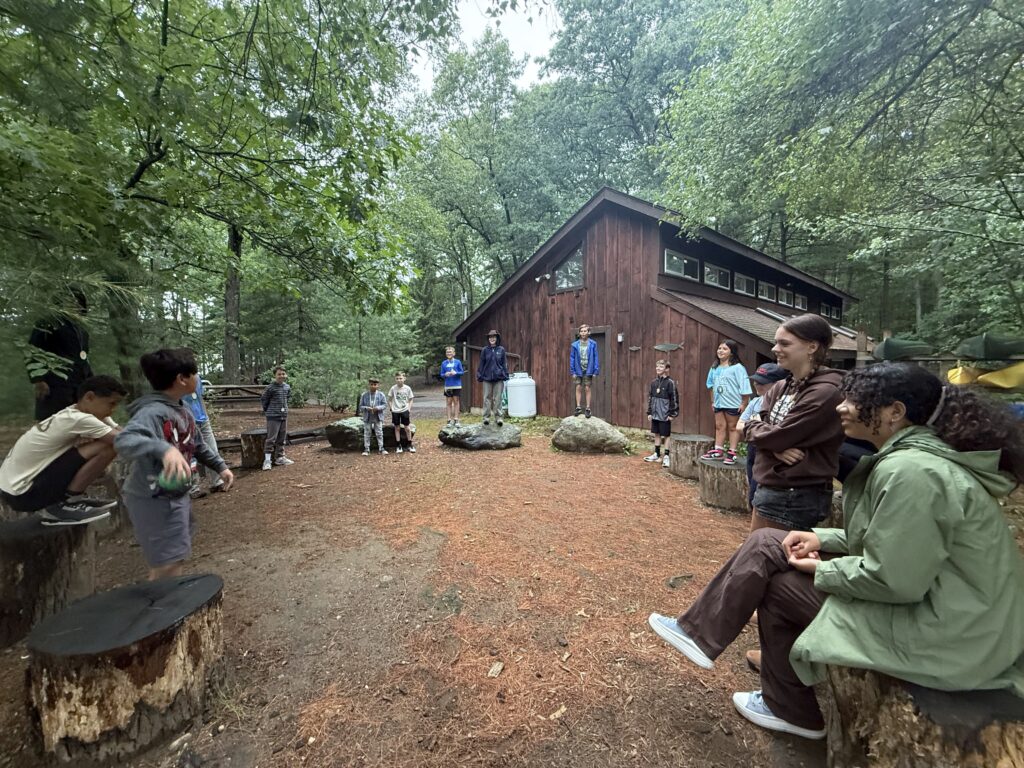
One of the things that makes Camp Woonasquatucket special is its home at the Leo Bouchard Conservation Center in Smithfield. Sitting at the intersection of woods and water, Leo B gives young people a safe and welcoming place to explore the natural world.
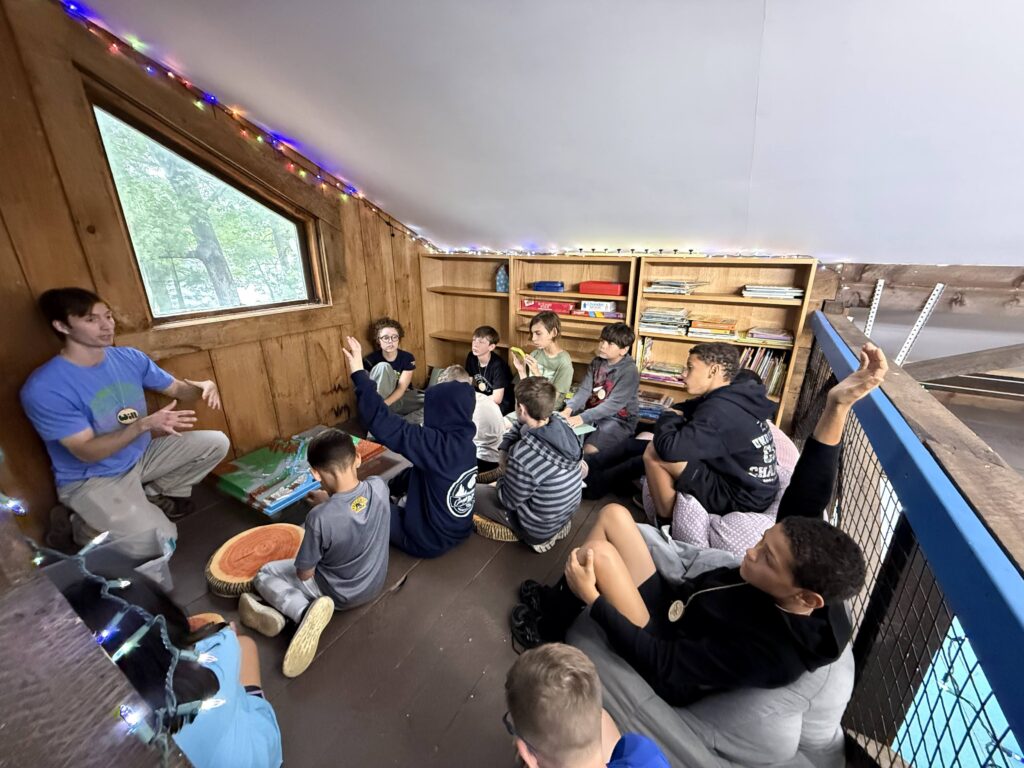
The Center itself becomes a mini museum during camp, filled with bones, microscopes, specimens, and plenty of opportunities to investigate whatever campers discover outside.
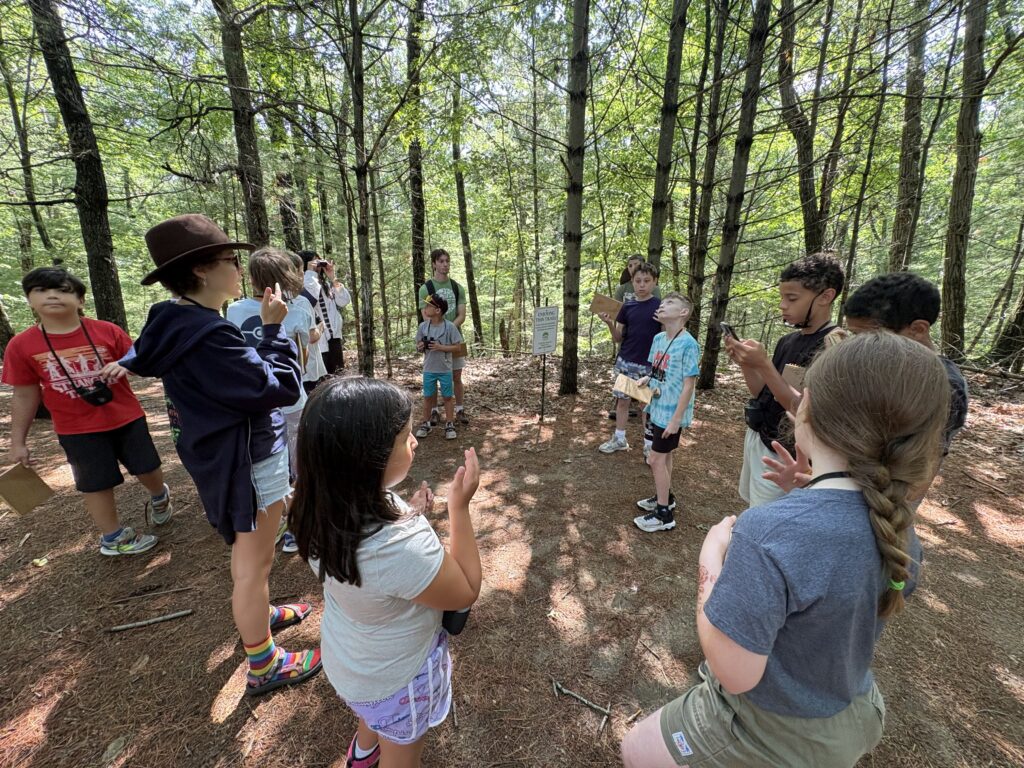
On hikes with Mr. Will, campers learned how forests grow and change over time. The woods surrounding Leo B were once farmland, making much of what we see today a second- or third-generation forest. Thanks to decades of conservation, campers can now see the layers of a healthy forest beginning to emerge.
They identified sassafras, blueberry bushes, saplings, mature trees, and other plants while learning about forest succession. They also investigated forest gaps, where the fall of a large tree suddenly allows sunlight to reach ground that may have been shaded for decades. These openings create opportunities for shrubs, saplings, and other sun-loving species to thrive.
Campers spotted mushrooms, ghost pipes, chicken of the woods, and other fascinating organisms along the way. After rainy days, fungi seemed to appear everywhere, creating the perfect opportunity to learn about the essential role decomposers play in recycling nutrients and keeping forests healthy.
Healthy forests also mean more habitat for wildlife, including deer, hawks, insects, birds, and countless smaller creatures.
What Tiny Creatures Tell Us About Water Quality
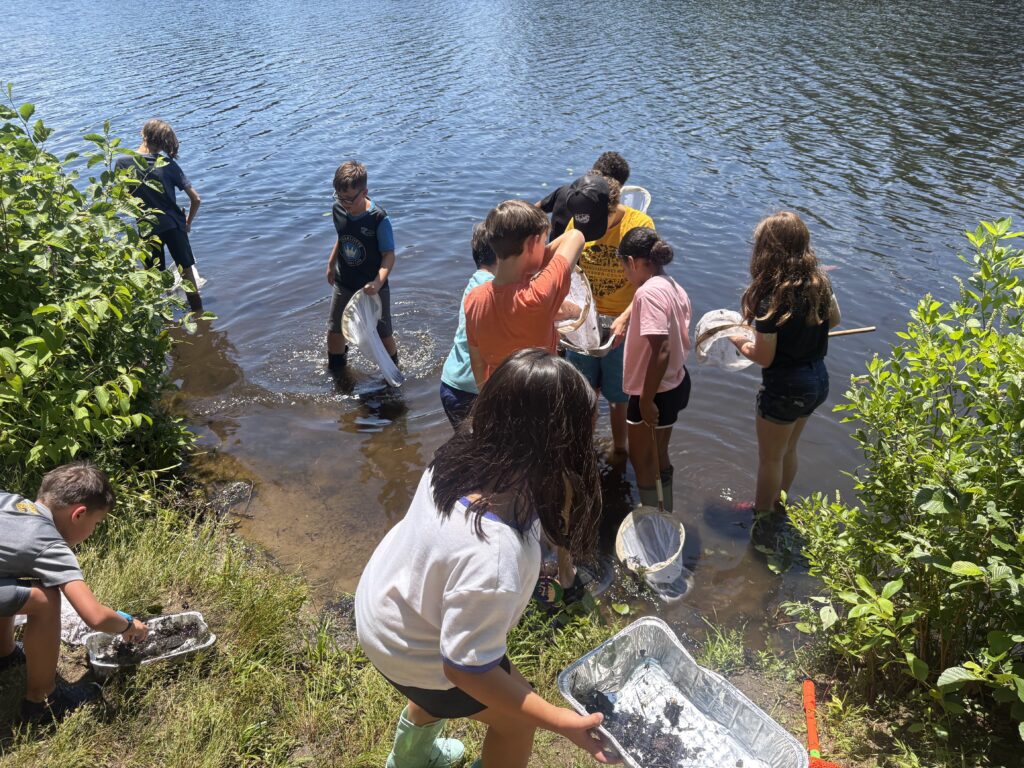
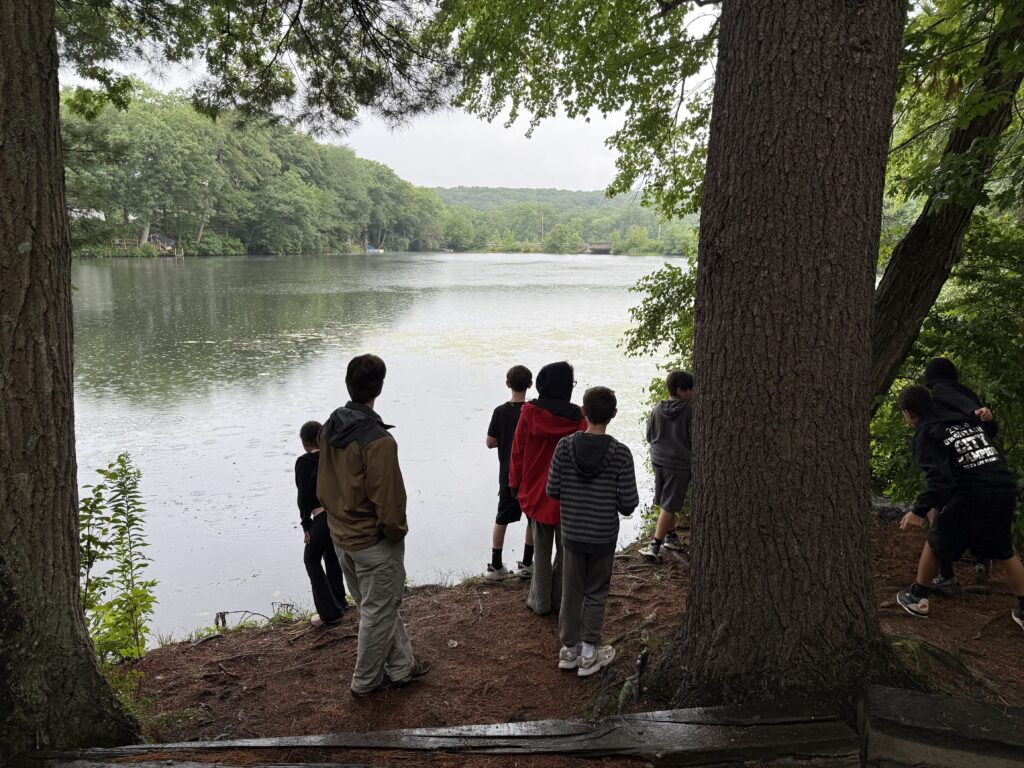
Campers headed to Stump Pond to collect and examine macroinvertebrates, small aquatic animals that can tell scientists a surprising amount about the health of a waterway.
Among their finds were crayfish, dobsonfly larvae, and dragonfly nymphs. Because different macroinvertebrates have different tolerances for pollution, their presence can serve as an indicator of water quality.
Campers learned that organisms such as leeches, tubifex worms, and certain midge larvae can tolerate much more polluted conditions. We were very happy that those pollution-tolerant species weren’t dominating our samples!
Instead of simply being told whether the water was healthy, campers got to collect the evidence, examine it, and begin drawing their own conclusions.
Hunting for Microplastics with “Baby Legs”
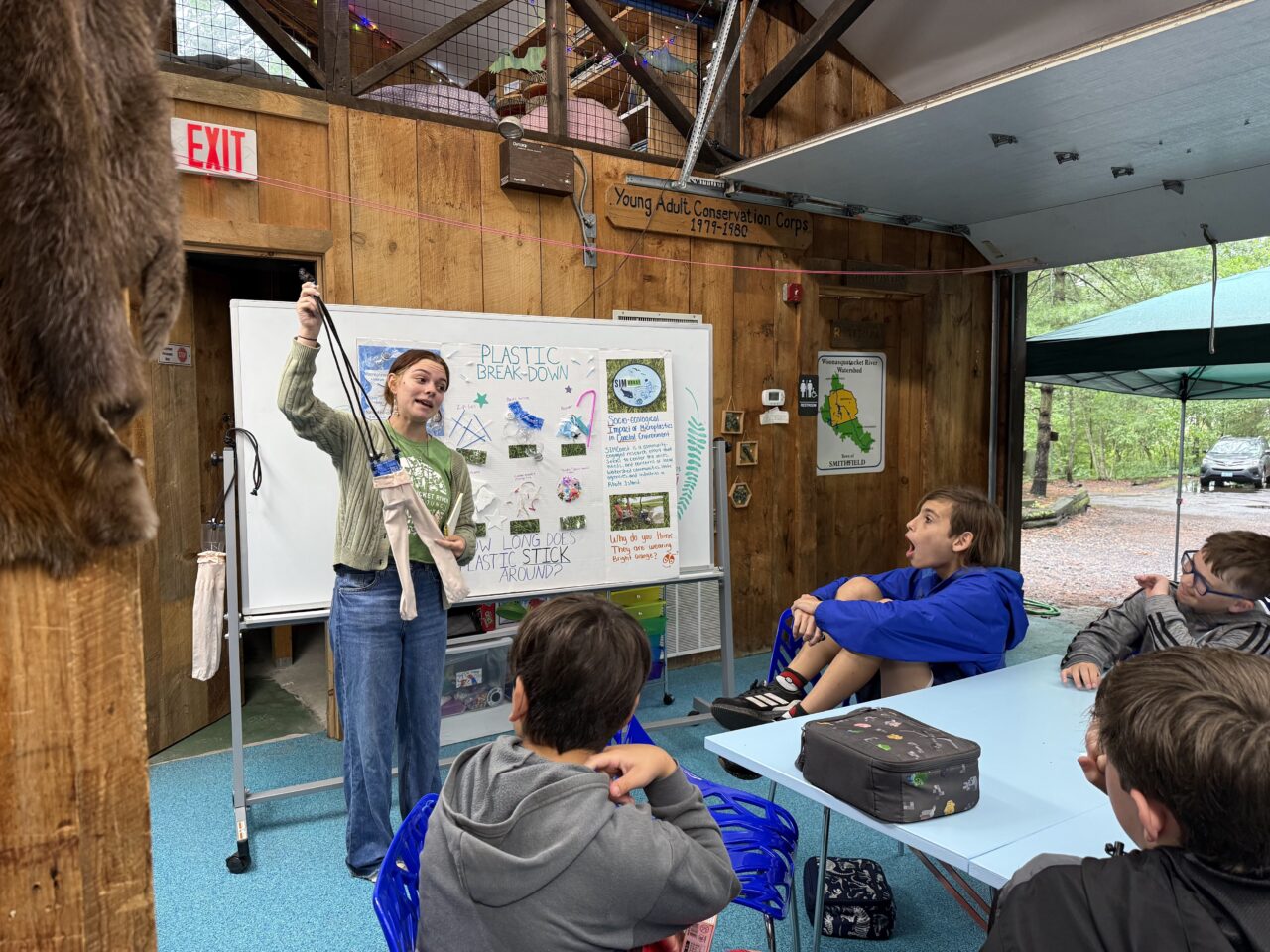
All four weeks of camp also included a special focus on microplastics thanks to Rhode Island College interns Elizabeth and Judy.
Through games, experiments, and hands-on activities, they helped campers understand how tiny pieces of plastic enter waterways, how difficult they can be to remove, and why scientists are studying their effects on aquatic ecosystems.
Campers even built a research tool known as “Baby Legs,” an inexpensive device designed to collect microplastics from moving water. The design uses baby leggings attached to a plastic bottle and anchored in the water, allowing water to pass through while capturing tiny plastic particles for observation.
The open-source design was created by Jeffrey Yoo Warren and shared through Public Lab, making it possible for students, educators, and community scientists to build their own tools for investigating plastic pollution.
A special thank you to Rhode Island College and SimCoast for making this partnership and learning opportunity possible.
Owl Pellets, Food Webs, and Nature’s Rodent Control
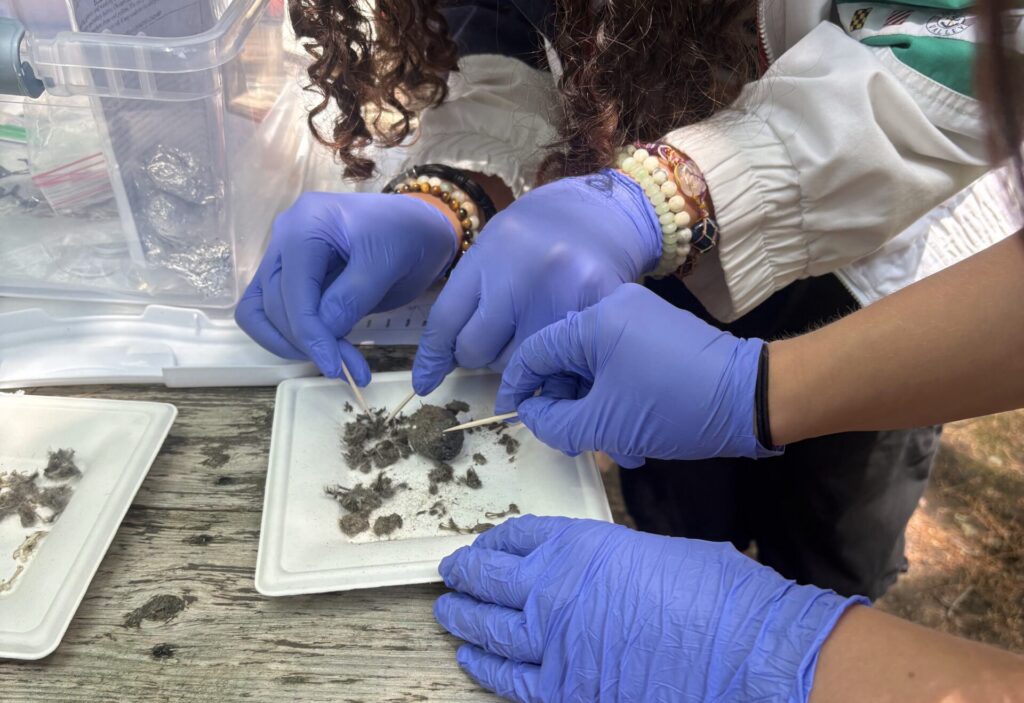
Campers got to dissect owl pellets which are the compact bundles of fur, feathers, and bones that owls regurgitate after eating prey they cannot completely digest.
Inside, campers discovered tiny skulls, hips, bones, and other remains from rodents and other small animals. It was part laboratory procedure, part detective work, and a memorable way to learn about food chains.
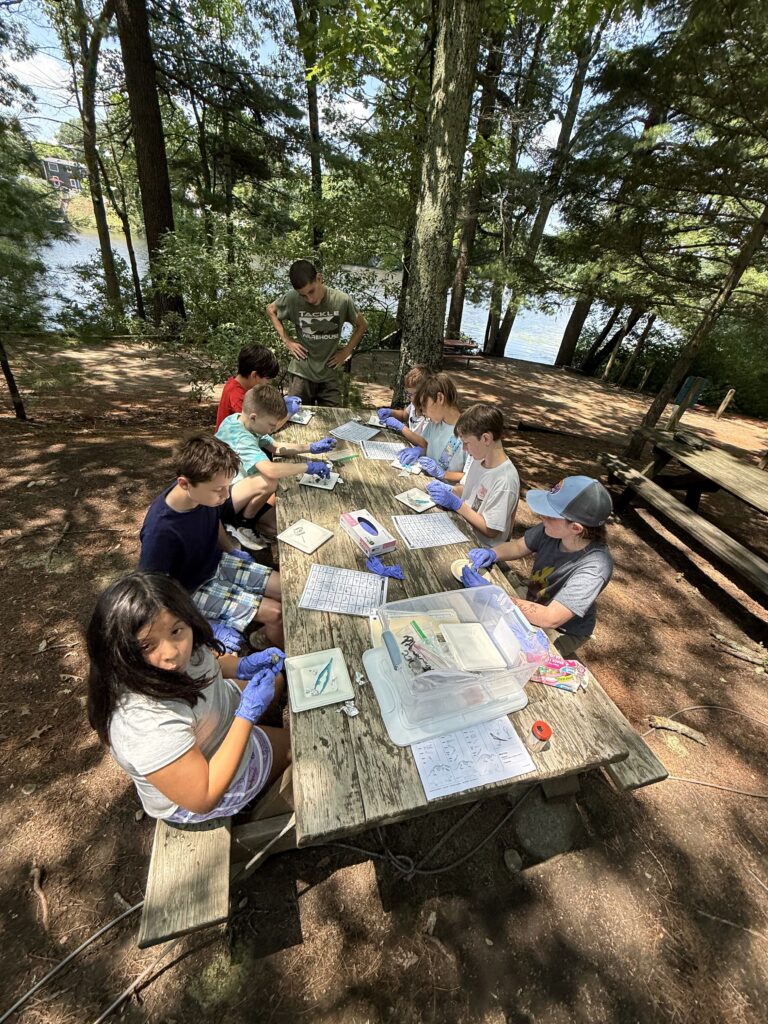
The activity also opened a conversation about the important role owls and other predators play in controlling rodent populations naturally. Campers learned how poisons intended for rats and mice can travel through the food web when a predator eats a poisoned animal, potentially harming the very wildlife that helps keep rodent populations in balance.
Meet Squash
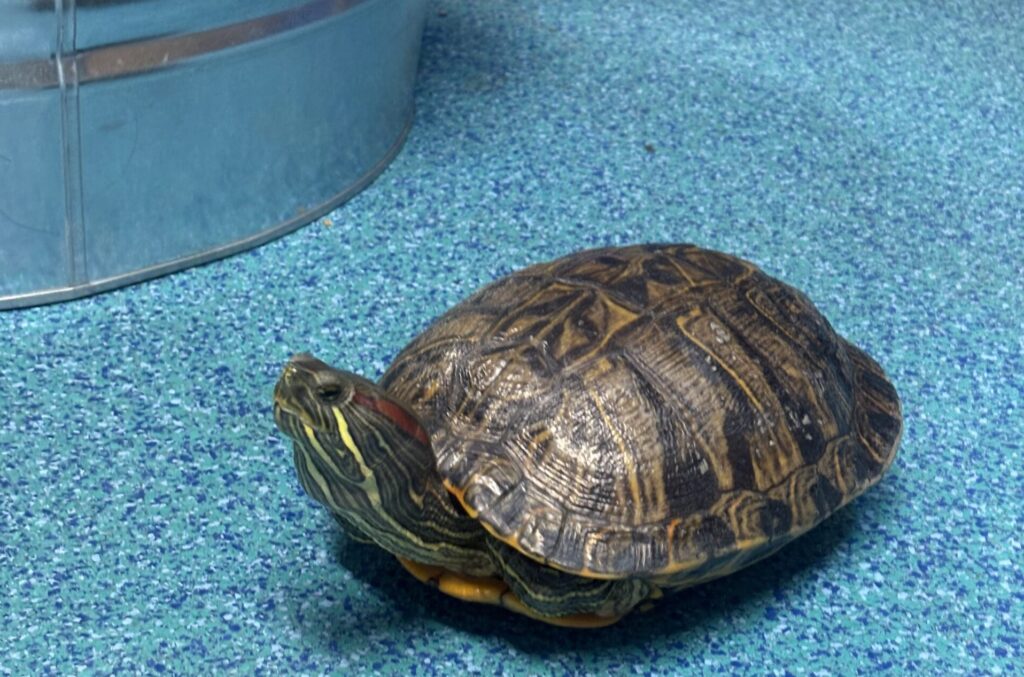
They then met Squash, the very large, and very pregnant, red-eared slider turtle rescued after being found abandoned along the side of a road.
Squash gave campers a firsthand lesson about responsible pet ownership and invasive species. Red-eared sliders are commonly kept as pets but can cause serious ecological problems when released into habitats where they don’t belong.
Campers even had the opportunity to observe Squash laying eggs.
That lesson connected directly to another invasive species campers encountered at Stump Pond: water chestnut. This aggressive aquatic plant can spread rapidly across the surface of a pond, crowding out native plants and threatening the health of the entire aquatic ecosystem.
At the same time, campers were greeted throughout the summer by some of Stump Pond’s regular residents, including geese, ducks, and one especially memorable mama duck with her ducklings.
Science Meets Creativity
Camp Woonasquatucket isn’t only about learning scientific vocabulary. We want young people to investigate, experiment, create, and find their own ways of connecting with the environment.
Campers kept field journals, experimented with watershed models, learned about pollution, created collages from recycled magazines and booklets, and spent time with Brookie our 7-ft stuffed animal Brook Trout.
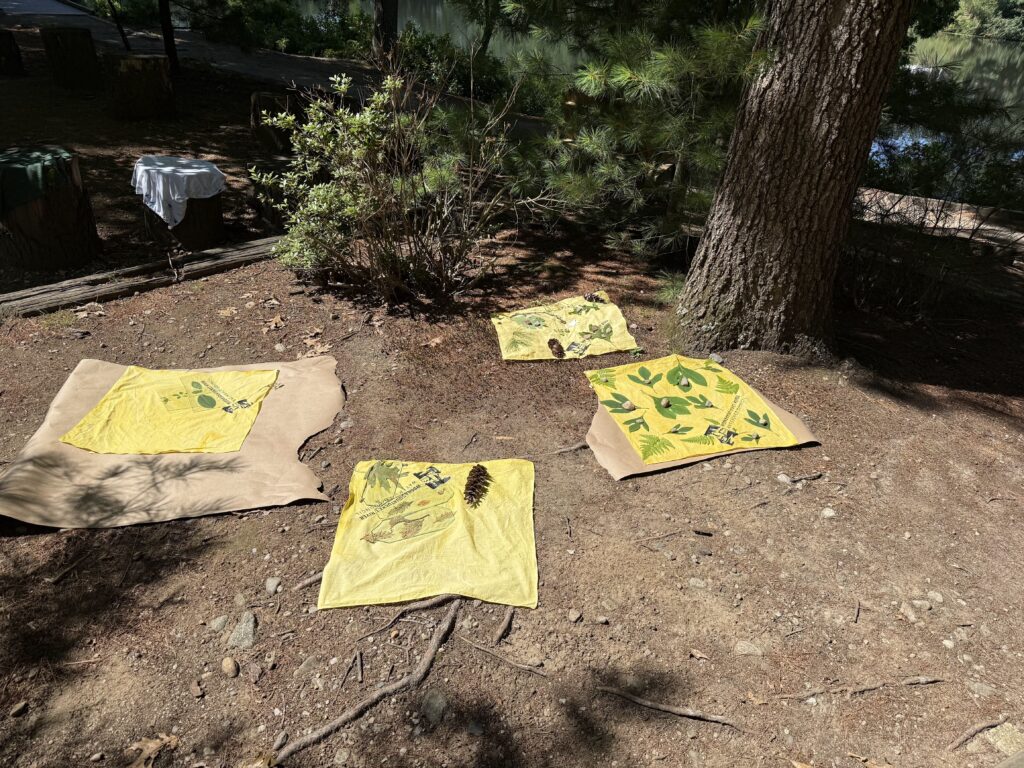
Every week also included art projects. Campers decorated their own bandannas, and during the third week experimented with anthotype printing, using turmeric and sunlight to create images through a plant-based photographic process.
They also painted birdhouses to bring home, giving each camper another way to continue observing and supporting wildlife after camp ended.
And because you can’t spend a summer beside Stump Pond without getting out on the water, a huge thank you goes to the WRWC Recreation Team, who provided paddle trips each week and helped campers experience the watershed from a completely different perspective.
Continuing Our Partnership with Onward We Learn
Our second summer at Leo B also included another exciting year of partnership with Onward We Learn.
During a four-day program, high school students participated in many of the same hands-on environmental activities while going deeper into questions of environmental justice.
Students conducted environmental testing and participated in workshops asking them to imagine what an environmentally just future could look like. Conversations explored climate change, habitat restoration, energy production, pollution, and the ways young people can help create healthier communities.
One student summed up the experience with an important question: “How could young adults like us help to live in a safe and better world in the future?”
Another reflected that their most important takeaway was recognizing how improperly people often treat the environment.
A Place to Explore and Learn
Camp Woonasquatucket gives young people the opportunity to be outside, experiment with their hands, ask questions, encounter wildlife, and experience things they may not have access to in a traditional classroom.
And all of this happens surprisingly close to Providence.
The Leo Bouchard Conservation Center offers access to miles of trails, picnic areas, fishing, paddling, forests, and waterways. It is a tremendous community asset and a place where people can safely interact with and learn from the natural world.
The surrounding conservation property is open to the public, and WRWC looks forward to creating even more opportunities for the community to experience Leo B, including future open museum hours where visitors can explore our growing collection of specimens, bones, microscopes, educational materials, and hands-on activities.
After a second year that was bigger and better than ever, we’re already excited about what’s ahead for Camp Woonasquatucket.
Most of all, we’re grateful to the 45 young people who spent their summer exploring with us, to their families, and to the educators, interns, partners, and WRWC staff who made four unforgettable weeks possible.
Thank you to Onward We Learn, Rhode Island College, SimCoast, our RIC interns Elizabeth and Judy, and the WRWC Recreation Team for helping us create a summer filled with science, creativity, curiosity, and adventure.
See y’all next year!