Community Voices Help Shape Providence’s Climate Justice Plan Update
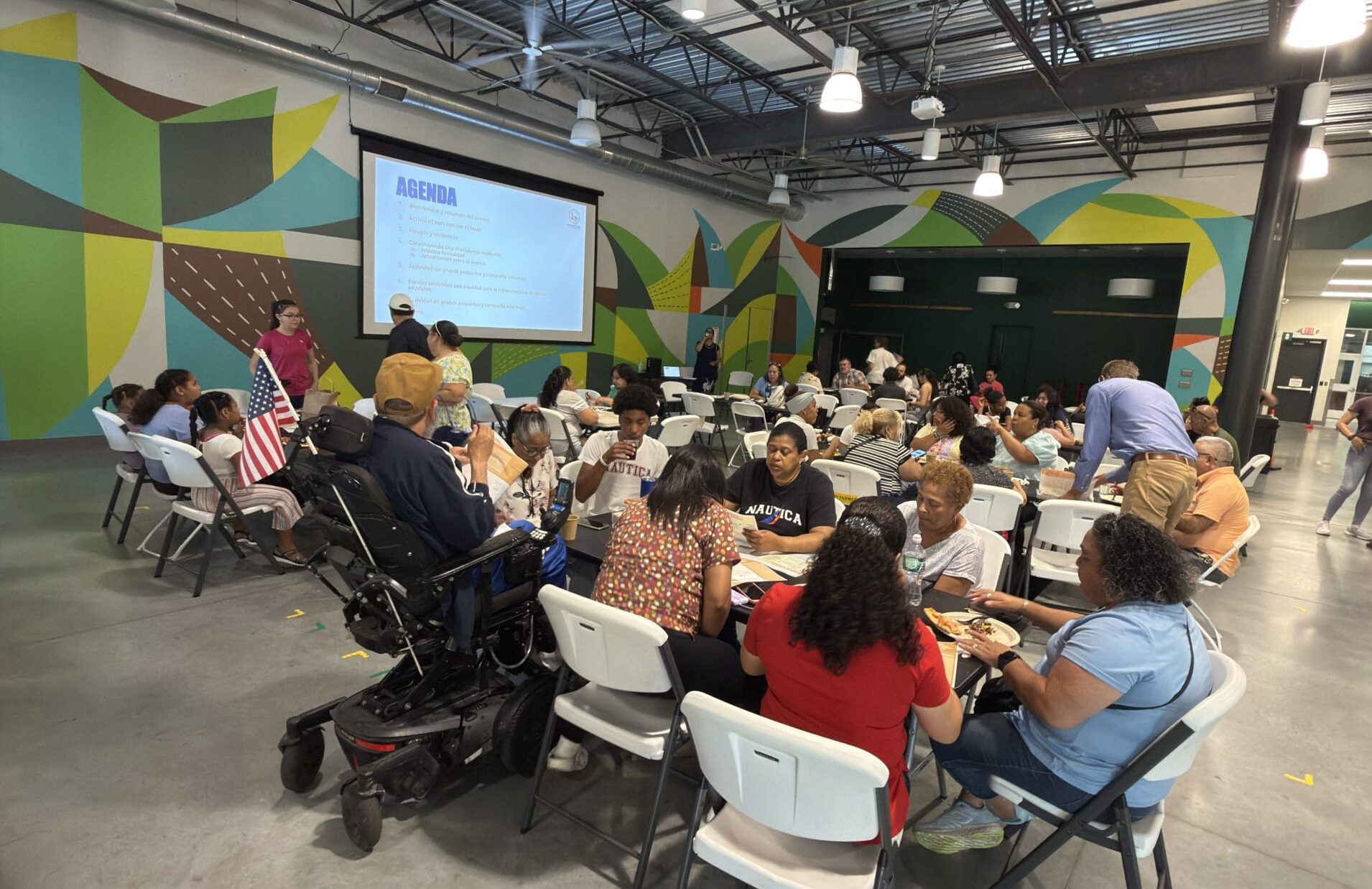
Recently, the Woonasquatucket River Watershed Council joined the City of Providence Office of Sustainability to co-host a community review of the Providence Climate Justice Plan Five-Year Update. Approximately 60 community members came together at Farm Fresh Rhode Island to learn about the plan, share their experiences, and help identify priorities for Providence’s climate future.
The session was especially meaningful because it was one of the first opportunities for the updated plan to be presented and discussed fully in Spanish, making the process more accessible to Spanish-speaking Providence residents.
Members of WRWC’s Nuevas Voces and Campeones programs participated alongside friends, family members, and other community members, bringing their experiences and perspectives directly into the planning process.
We are grateful to Farm Fresh Rhode Island for once again providing a welcoming space for this important community conversation.
Connecting Climate Planning to Our Neighborhoods
The Climate Justice Plan is Providence’s roadmap for creating a more equitable, low-carbon, and climate-resilient city. Originally co-developed by the City of Providence Department of Sustainability and the Racial and Environmental Justice Committee of Providence, the plan includes objectives and strategies addressing everything from buildings and transportation to community health, jobs, governance, and environmental justice.
But plans like this are strongest when they reflect what residents are actually experiencing.
Throughout the session, every participant had an opportunity to contribute to the five-year update.
Community members identified the places where they live, work, and play and discussed the climate challenges they see in those places. Conversations touched on flooding, extreme heat and urban heat islands, air quality, access to green space, and the financial burdens that climate change can place on individuals and families.
And one concern came up again and again: flooding.
For communities already experiencing the impacts of heavier rainfall, inadequate drainage, and other climate hazards, resilience isn’t an abstract idea. It affects homes, transportation, finances, health, and everyday life.
What Should Providence Prioritize?
Participants were also asked to identify and rank their top climate justice priorities and consider how much progress they believe Providence has made in each area.
The conversation included housing and buildings, community health, workforce development, transportation, heat and flooding, and governance and policy.
This gave participants an opportunity not only to say what matters most to them, but also to evaluate where they believe more attention and investment are needed.
The exercise helped connect the city’s broader climate goals with the lived experiences of residents, particularly those from neighborhoods disproportionately affected by climate change and environmental injustice.
Big Ideas for a More Resilient Providence
Participants shared ambitious ideas for how Providence could better prepare for and respond to climate change. One participant proposed creating a climate relief fund that could provide direct financial assistance to people affected by climate hazards such as flooding.
Ideas like this highlight an important part of climate justice: preparing infrastructure for a changing climate is only part of the solution. Building resilience also means ensuring that residents and families have the resources they need to recover when climate impacts happen.
Building Resilience Through Community
WRWC staff Jenny and Adri also represented the Olneyville Resilience Hub and citywide resilience efforts, sharing information about the Hub and the critical role community-based spaces can play in preparing for climate impacts.
Resilience hubs can connect residents with information, resources, services, relationships, and support before, during, and after emergencies. Just as importantly, they create opportunities for residents to help determine what resilience should look like in their own neighborhoods.
That community leadership is essential to climate justice.
Learning About Providence’s Next Steps
Each participant received a packet of the presentation materials so they could continue reviewing and discussing the information after the session.
Participants also learned about proposals and strategies Providence is considering as part of its broader climate resilience work, including a proposed stormwater fee that would charge property owners based on the amount of stormwater runoff generated by their properties.
As Providence continues its five-year Climate Justice Plan update, community engagement opportunities like this one help ensure residents aren’t simply hearing about decisions after they are made. They are helping inform the priorities, challenges, and ideas that shape the city’s approach.
We are grateful to everyone who participated, shared their experiences, asked questions, and brought their ideas to the table.
Stay tuned for additional community engagement opportunities around Providence’s Climate Justice Plan Five-Year Update.
Learn More
Learn about the Providence Climate Justice Plan Five-Year Update
Read the full Providence Climate Justice Plan in English
Read the full Providence Climate Justice Plan in Spanish