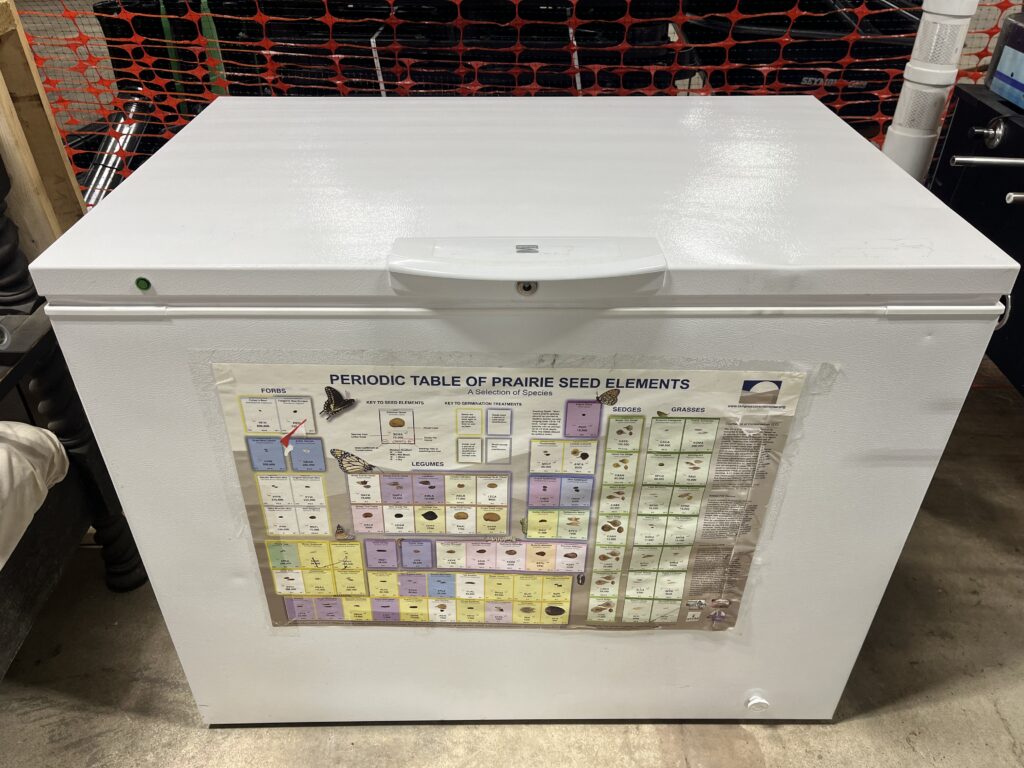
Over the summer, we added a powerful new tool to our stewardship work along the Woonasquatucket River: a donated seed freezer from Native Plant Trust. It may not look flashy from the outside, but inside that freezer is a big step forward for how we protect, grow, and return native plants to the Greenway.
The freezer, donated by Native Plant Trust gives us dedicated cold storage for native seeds collected right here in our watershed. These seeds represent more than a dozen indigenous, pollinator-supporting species, including smooth aster, hairy aster, beardtongue, winterberry, goldenrod, little bluestem, and tall thimbleweed. Many of these plants are not widely available through commercial nurseries, but they are critical to local wildlife and ecosystem health.
Huge thanks are due to Poe Johnson, horticulturist at Native Plant Trust, for making this connection happen and helping us understand how to use this resource responsibly and effectively.
As Poe explains:
“The Native Plant Trust operates their rare seed bank as part of a broader mission to safeguard New England’s native flora, using ethical seed collection and long-term cold storage to protect the genetic material of rare and endangered plants.
It’s being expanded with the Restoration Accelerator program to provide that same space for native plant growers throughout New England who need to clean and store large quantities of native seed that might not before have been widely commercially available.
Everything stored for nurseries isn’t rare, but it’s still important. These are more commercially unusual species that are integral to local wildlife.”
That distinction matters. Native Plant Trust’s rare seed bank focuses on very specific conservation goals for rare and endangered species. The Restoration Accelerator, which supports growers and partners like us, is about building supply: ethically sourced, New England–grown native plant material that can be used at scale for restoration projects. Together, these efforts ensure that restoration doesn’t just look good, but is grounded in ecological integrity.
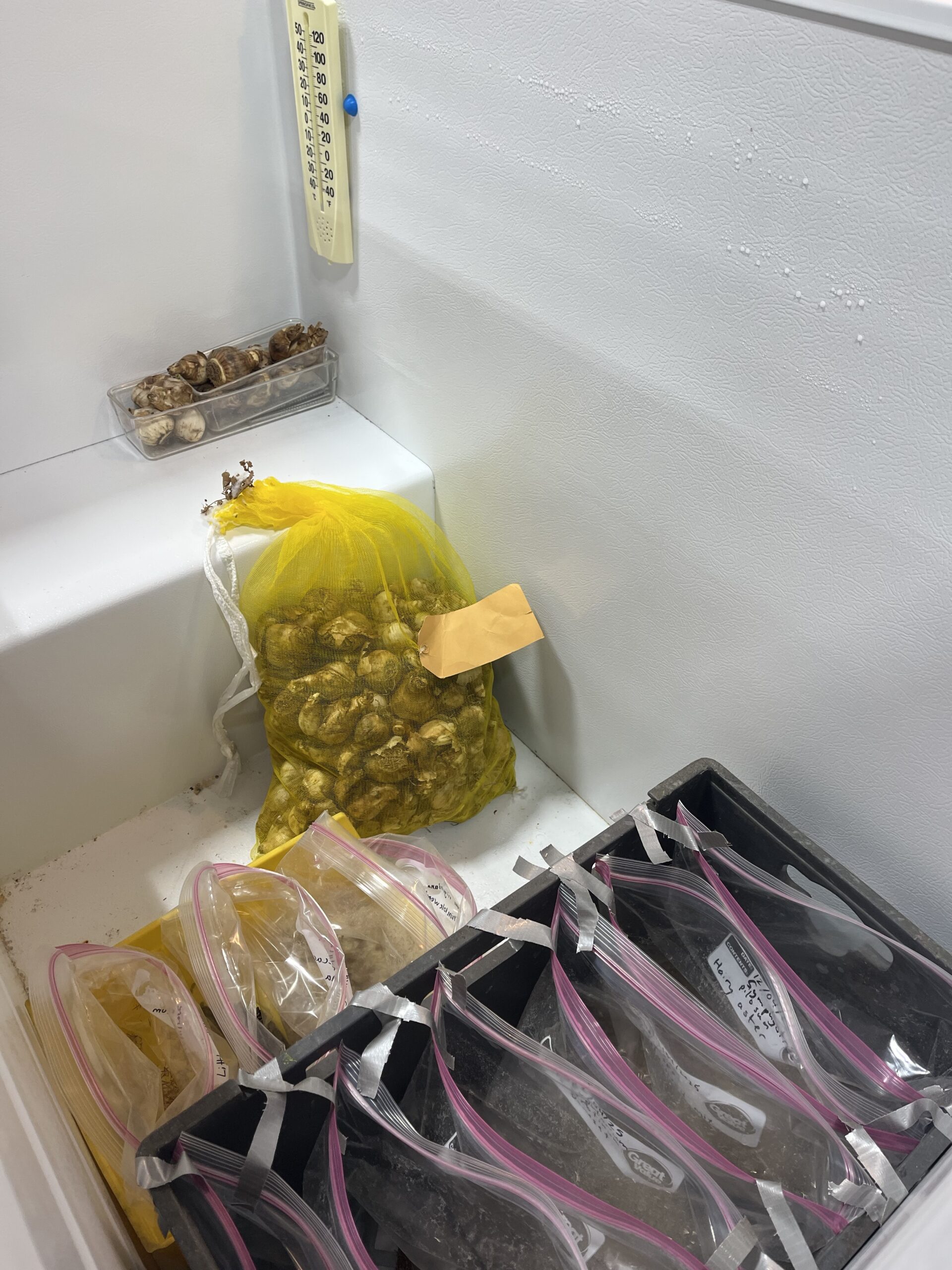
Why Seed Banking Matters on the Greenway
For us at WRWC, this freezer directly strengthens our stewardship practices. Our River Rangers are out on the Greenway year-round managing invasive species, restoring habitat, and supporting amphibian and wildlife work. Now, instead of relying solely on outside sources, we can collect, store, and grow seeds from the very places we are restoring.
This is especially important in areas like Riverside Park and other “calvary locations” where invasive management is ongoing. Once invasives are removed, those areas need native plants ready to go. Seed banking allows us to respond quickly and intentionally, replanting with species that are adapted to the Woonasquatucket watershed.
We are also focusing on local ecotypes. An ecotype isn’t a different species; it’s a genetic variation shaped by local conditions. Protecting and propagating these ecotypes helps ensure that the plants along the Greenway are resilient, climate-adapted, and truly local.
From Freezer to Field
This work builds on what we started last year and expands our capacity in exciting ways. With partners like Terracorp and leadership from staff including Julia McGuigan, we’re increasing opportunities for River Rangers to engage in seed collection, storage, and planting as part of their regular work.
We’re also growing our digital seed bank library and helping expand Grow RI Natives seed banks in public libraries. These seed libraries offer verified, high-quality native seeds to community members, making restoration something everyone can participate in.
Looking Ahead
This freezer helps us keep wild native plants thriving along the Woonasquatucket, strengthens our restoration work, and deepens our partnership with Native Plant Trust.
We’re grateful to Poe Johnson and the entire Native Plant Trust team for supporting this work and for their leadership in protecting New England’s native flora. With better tools, stronger partnerships, and seeds rooted in this place, we’re growing a healthier, more resilient Greenway for years to come.